We began the day at the annual Bridge Day Festival at New River Gorge. We were back to the van at 11:45 AM. I put the address for Congaree National Park into the navigation and it was a 5 hour and 3 minute drive, which would put us arriving a few minutes before their 5 PM closing time.
If you know Tim, you likely know that he is a very conservative driver. We always add at least 30 minutes to the estimated drive time.
We both wanted to get our passport stamped at Congaree today. It is a small park and we weren’t sure if it would be convenient to get back to the VC again the next day.
Tim shocked me by driving like a “bat outta hell” all the way there!
We pulled in to the Visitor Center parking lot at 4:55 PM and I flew out of the car and raced to the Visitor Center. I got our stamp, the park map and information about the boardwalk walk with time to spare!! Thank you Tim!
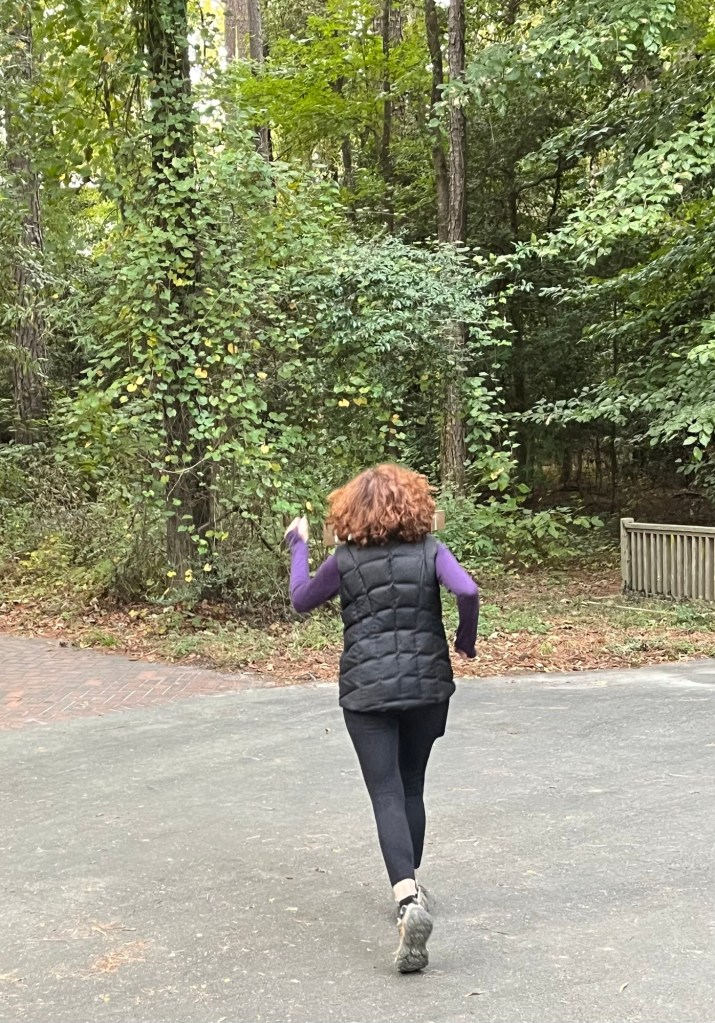
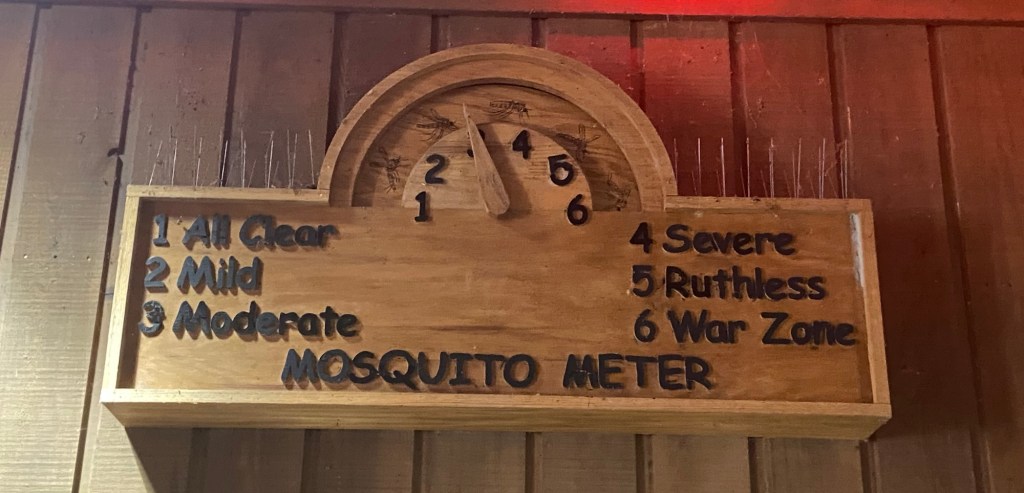
We spent the next 1-1/2 hours at Congaree National Park. We began with a photo of the park’s mosquito meter. The mosquitoes are notoriously bad. The park has a lot of standing water.
Congaree National Park was developed to protect the old growth floodplain forest. The park encompasses 27,000 acres. The threat of logging in the area lead to the protection of the park. More than 1000 species of moths and 140 species of butterflies live here.
Congaree only has a few camping spots and they are all the type you have to hike in to. You can’t sleep in the park in a camper, RV or van. Apparently canoeing, kayaking, and fishing are popular at Congaree, but we weren’t prepared for those activities.
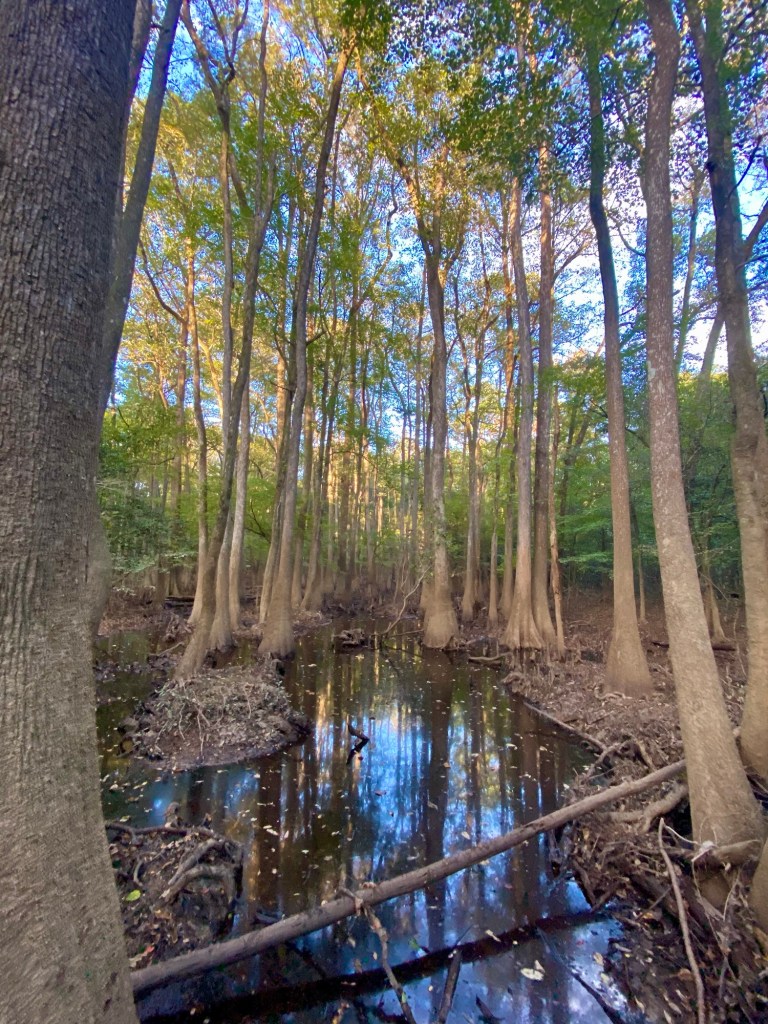

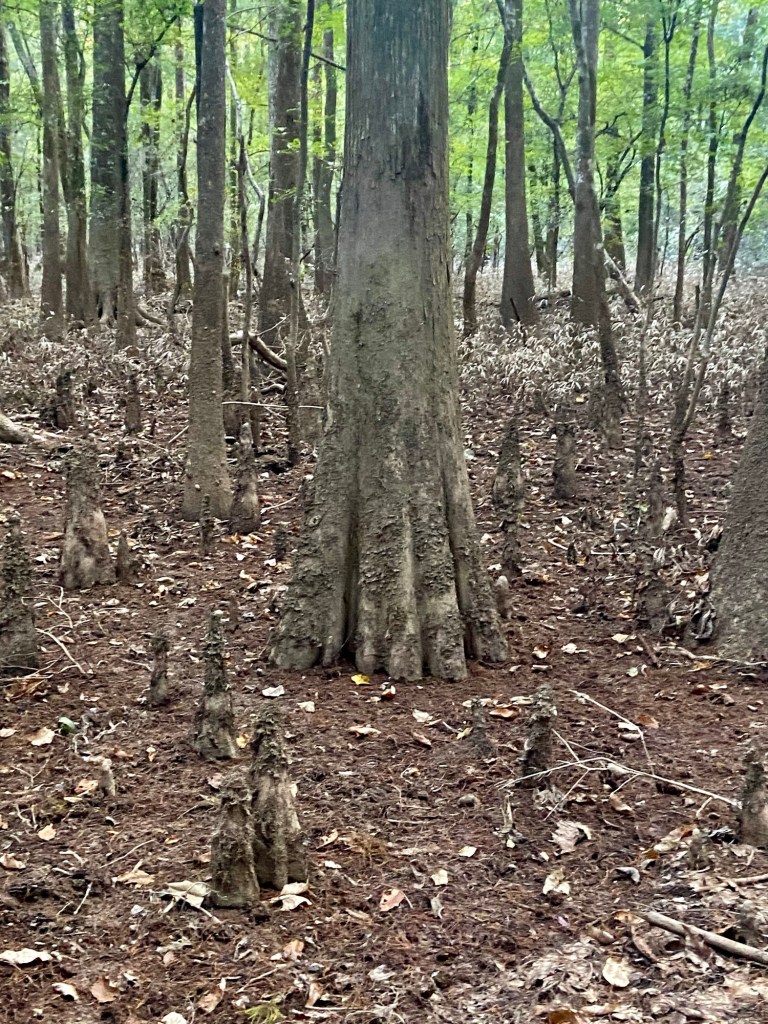
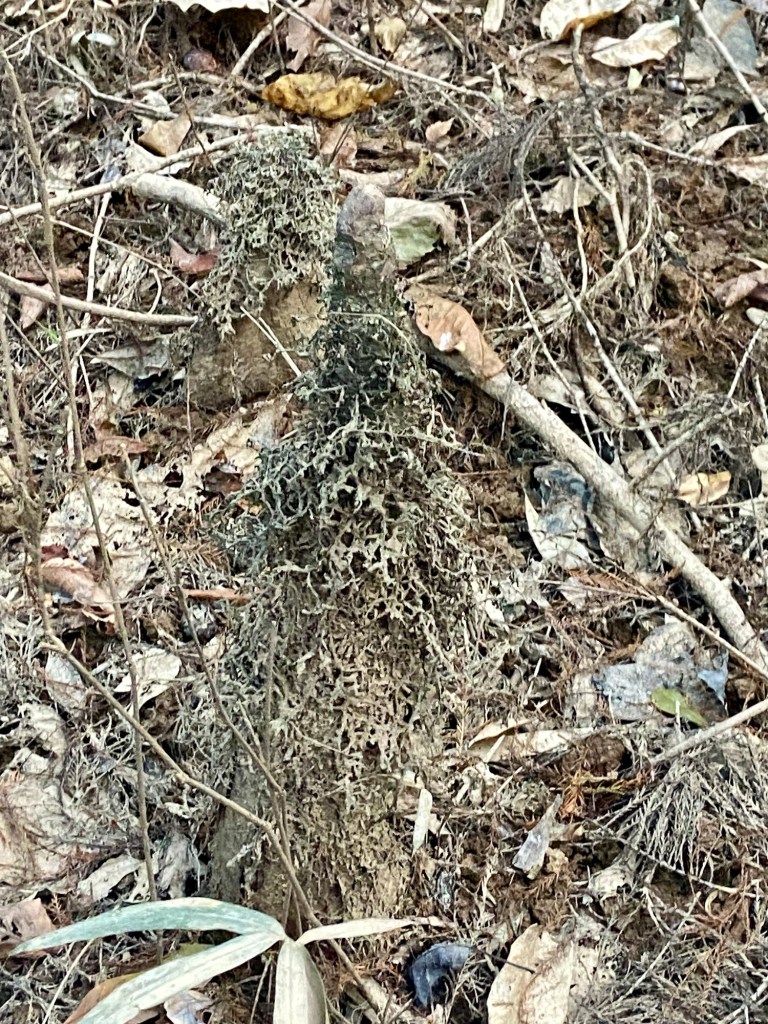
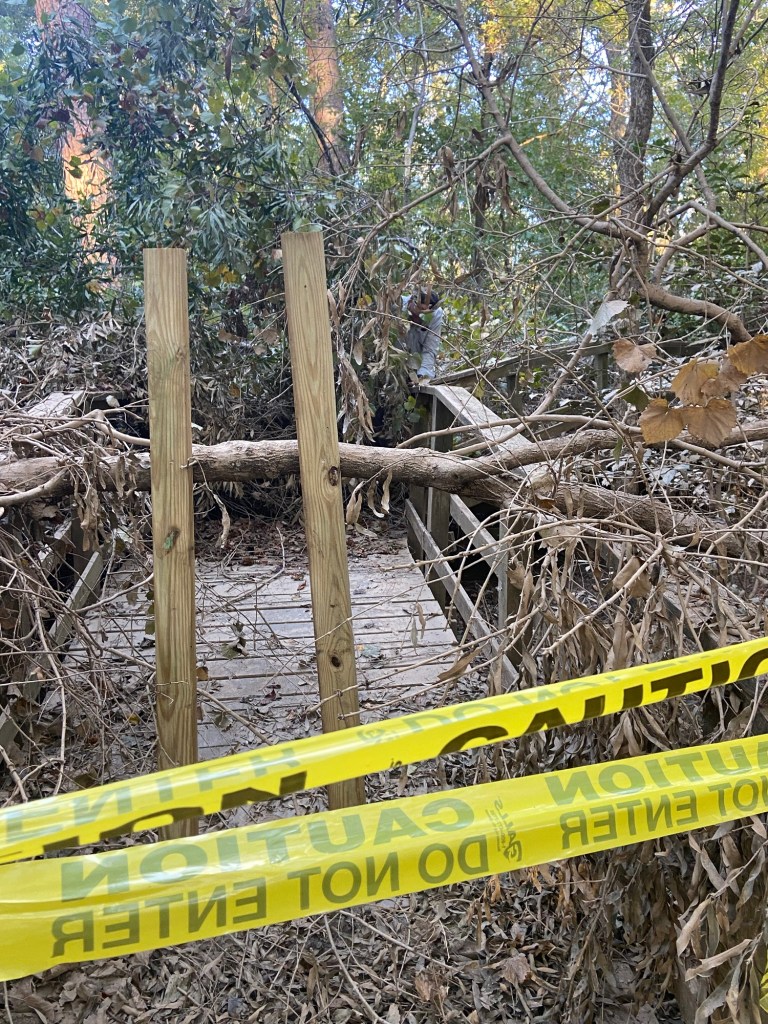
The most popular hike in the park is the 2.4 mile boardwalk trail. Hurricane Helene hit this area pretty hard a few weeks ago. A large tree went down and destroyed a section of the boardwalk. So, the Ranger told us that the hike is currently an out and back hike. We set off. The boardwalk has 20 numbered points of interest and a brochure with information at each stop. We learned a lot on the hike! We learned that bald cypress trees produce “knees”. The knees are woody projections that look like termite mounds, but are vertical growth from the shallow horizontal roots of the trees. Scientists aren’t sure of the purpose of the knees, but it may have something to do with extra stability during floods and high winds.
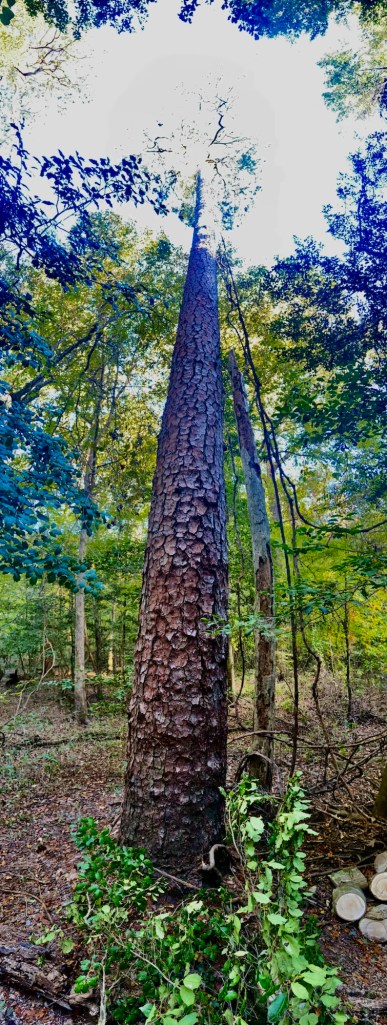
We learned Congaree has many “champion trees” that are the tallest or largest of their kind in the state and even the nation. We learned what a loblolly pine is and that it is commercially the most important tree in the southeast. Escaped slaves and bootleggers used to live in these woods because they were so dense that it was difficult for slave catchers or the law to pursue them.
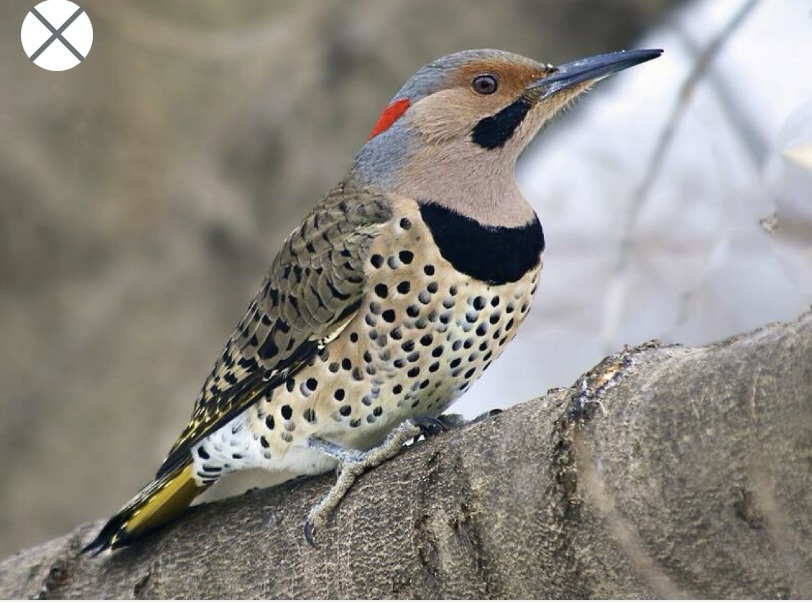
We were hearing a lot of bird song. I used the Merlin app to identify what we were hearing. We heard a Northern Flicker. We looked it up and it’s a really beautiful bird. We wished we had been able to see it as well as hear it!
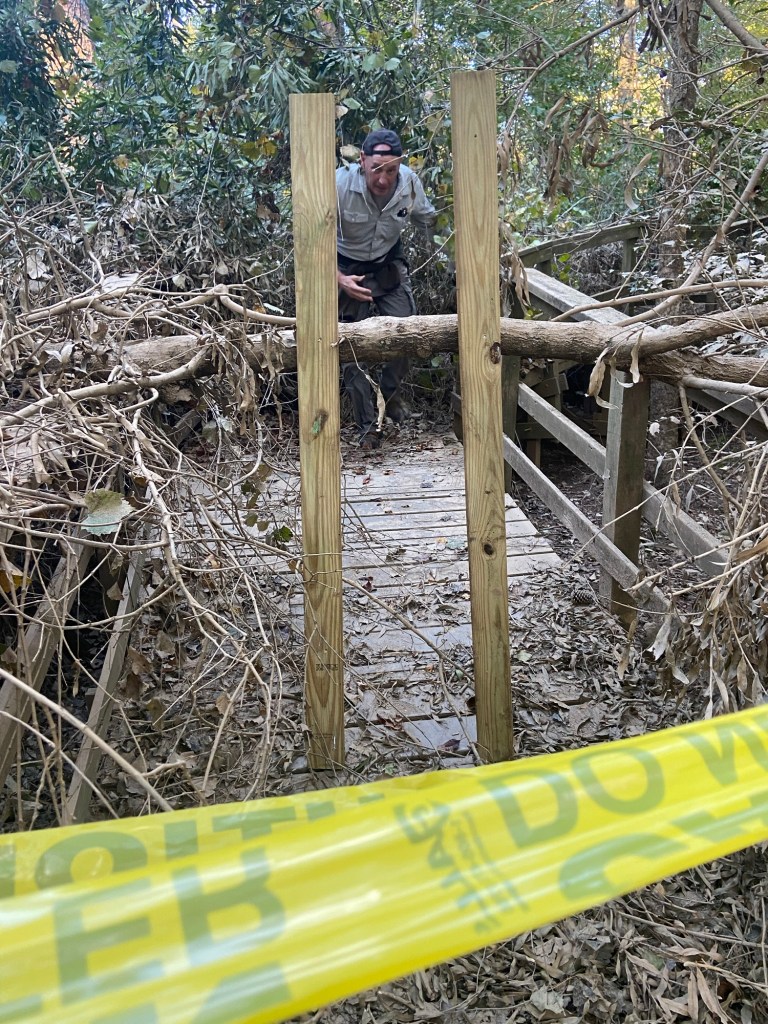
About 1-1/2 miles in we came to the damaged part of the boardwalk. Tim assessed it, and said, “We can climb over that!” The Visitor Center was closed, it was about 30 minutes before sunset, and we didn’t see anyone near by. We proceeded to climb over, under and through the huge tree and over sections of the destroyed boardwalk and completed the 2.4 mile loop.
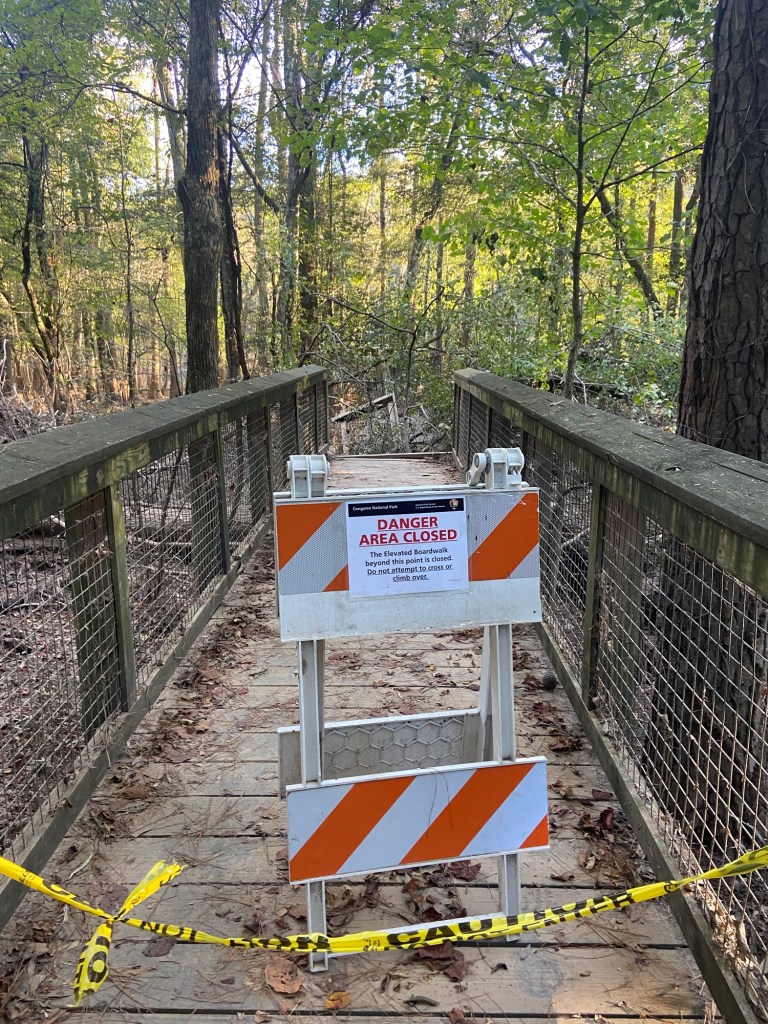
Upon our return to the VC, there was a board stating that there was a lot of damage to the few trails there are in the park and that some are closed for feral hog management.

We discussed it, and decided that we would take our photo with the park sign and be finished at Congaree National Park.
There’s no doubt we could have spent another half day at Congaree, but due to its remote location and no camping, I think we made the correct decision for the circumstances.
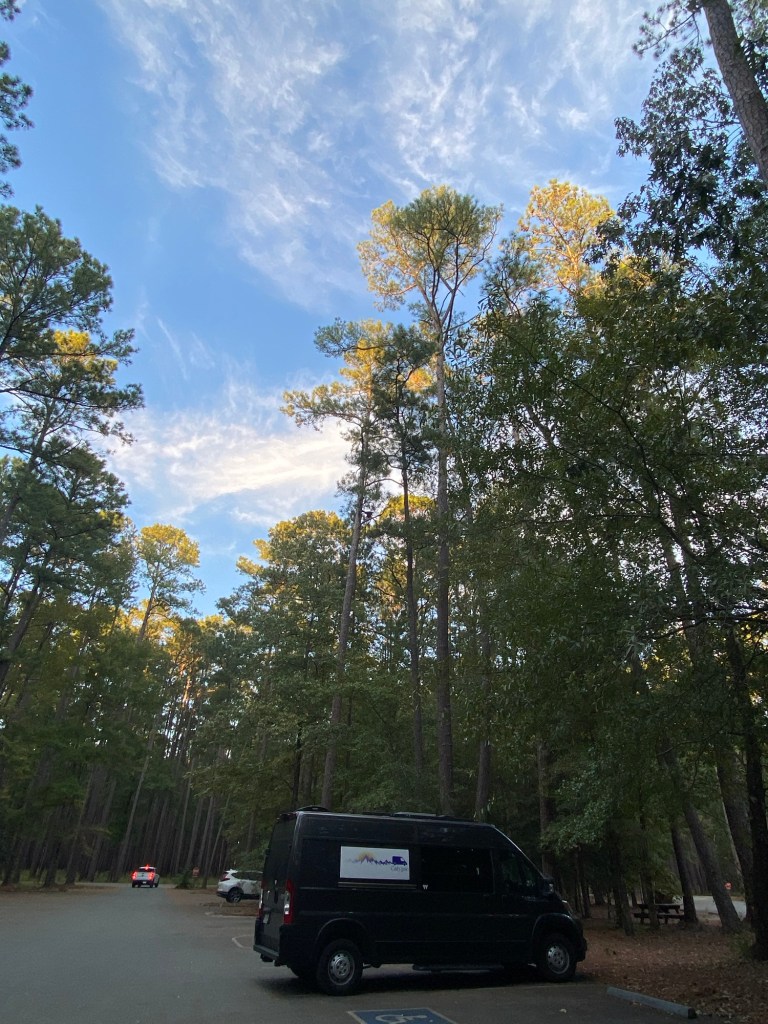
As the sky was lit with a beautiful sunset, we gassed up Calypso, and headed toward Great Smoky Mountains National Park.
 Wilderness Wandering
Leave a comment